
Tactical Pivot: What India Must Focus on in the 3rd T20I Against New Zealand
As the India tour of New Zealand moves to the historic capital for the 3rd T20I, the spotlight shifts from standard bilateral numbers to a critical evaluation of strategy. With the series finely poised, this encounter at Wellington offers more than just a chance to take a lead—it serves as a definitive tactical laboratory for a changing Indian T20 side under the captaincy of Shreyas Iyer.
Rather than looking at routine statistical previews, let’s dissect the core focal points and strategic shifts India needs to master in this crucial fixture.
1. Managing the Powerplay Acceleration vs. Risk Matrix
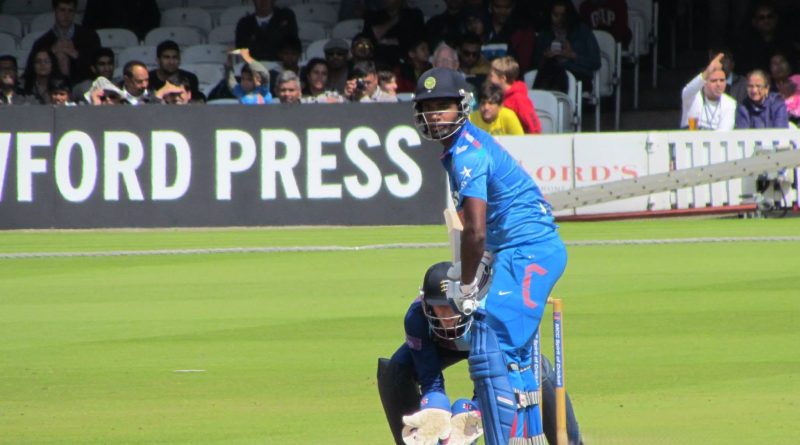
In modern T20 cricket, the powerplay template is heavily skewed toward high-risk, high-reward hitting. With aggressive openers like Abhishek Sharma and young prodigy Vaibhav Sooryavanshi setting the tone alongside Sanju Samson, India’s intent is undeniable.
The Focus Point: Wellington’s ground dimensions and windy overhead conditions often play tricks on aerial strokes early in the innings. Instead of mindless high-octane crashing, India’s top order must master situational awareness. The focus should be on exploiting the inner-ring gaps during the first six overs rather than relying solely on clearing the straight boundaries. Constructing an anchoring platform without compromising run-rate momentum will dictate whether India can insulate its middle order from early collapse against Kiwi pacers like Matt Henry and Lockie Ferguson.
2. Transition and Middle-Overs Stability Under Shreyas Iyer
With Shreyas Iyer leading the side alongside anchors and utility dynamos like Tilak Varma and Axar Patel, the middle overs (7-15) represent the true testing ground. New Zealand’s spin spearhead Mitchell Santner notoriously chokes the run flow by varying his pace into the pitch.
The Focus Point: India must focus on active rotation of the strike rather than letting dot-ball pressure build up. Against quality left-arm orthodox and mystery variations, the middle-order batters need to showcase a clear plan for sweeping and stepping down the track. How Iyer rotates his multi-dimensional all-rounders (such as Nitish Kumar Reddy and Naman Dhir) to manipulate field placements will be the barometer of India’s tactical maturity.
3. Death-Overs Execution and Controlling the Kiwi Power-Hitters
Defending totals or closing out run chases in New Zealand has always tested bowling units due to fast outfields and short square boundaries at various venues.
The Focus Point: The Indian pace battery—spearheaded by Arshdeep Singh and supported by the experience of Bhuvneshwar Kumar alongside emerging names like Prince Yadav—must prioritize execution over raw pace. Against a brutal New Zealand lower-middle order featuring Glenn Phillips, Michael Bracewell, and Tim Seifert, predictable slot deliveries are punished instantly. India’s primary bowling focus must be on executing wide yorkers, clever slower-ball bouncers, and shutting down the scoring angles through the off-side arc.
Squad Overview for the 3rd T20I
- India Squad: Shreyas Iyer (C), Sanju Samson (wk), Abhishek Sharma, Vaibhav Sooryavanshi, Tilak Varma, Shivam Dube, Axar Patel, Naman Dhir, Nitish Kumar Reddy, Bhuvneshwar Kumar, Arshdeep Singh, Varun Chakaravarthy, Kuldeep Yadav, Mayank Yadav, Prince Yadav.
- New Zealand Squad: Mitchell Santner (C), Tim Seifert (wk), Finn Allen, Devon Conway, Daryl Mitchell, Glenn Phillips, Bevon Jacobs, Michael Bracewell, Nathan Smith, Matt Henry, Lockie Ferguson, Adam Milne, Kyle Jamieson, Jacob Duffy.
Final Word
For India, the 3rd T20I is less about altering personnel and more about fine-tuning execution parameters. If the Men in Blue can adapt quickly to Wellington’s conditions and counter Santner’s middle-overs squeeze, they will take a giant step toward sealing the series.