
India vs New Zealand, 3rd T20I – Tactical Brilliance Meets Batting Carnage in Guwahati
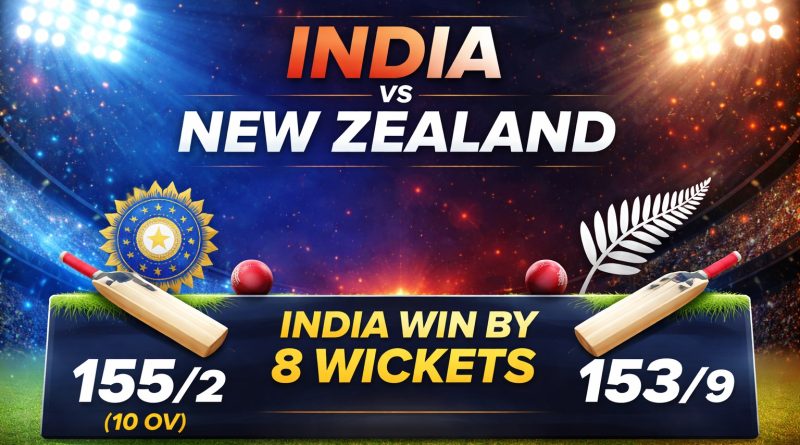
Guwahati, January 25, 2026 — India produced a near-perfect performance in the third T20I against New Zealand at the Barsapara Cricket Stadium, outplaying the visitors in all three departments to secure an emphatic eight-wicket victory with a remarkable 60 balls remaining. The win handed India a 3–0 unassailable lead in the five-match series and underlined their growing authority in the shortest format.
A disciplined bowling display, spearheaded by Jasprit Bumrah, restricted New Zealand to a modest total before a breathtaking batting exhibition led by Abhishek Sharma brought the contest to a swift conclusion.
New Zealand Innings: Early Blows and Missed Opportunities
New Zealand 153/9 in 20 overs
Asked to bat first after India opted to field, New Zealand never truly settled. The innings began disastrously when Devon Conway was dismissed for one in the opening over, setting the tone for a difficult night. Rachin Ravindra followed soon after, and Tim Seifert’s resistance ended in the fifth over, leaving New Zealand 36 for 3 at the end of the powerplay.
India’s bowlers were relentless in their execution. Harshit Rana provided early breakthroughs, while Jasprit Bumrah’s pace and accuracy consistently troubled the batters. Bumrah removed Seifert with a skidding delivery before striking twice at the death, dismissing Kyle Jamieson and captain Mitchell Santner to finish with outstanding figures of 3 for 17.
Glenn Phillips attempted to rebuild the innings with a measured 48 off 40 balls, anchoring New Zealand through the middle overs. Mark Chapman offered support with a brisk 32 off 23, and together they briefly lifted the scoring rate. However, India’s spinners ensured that momentum was short-lived.
Ravi Bishnoi emerged as a key figure in the middle overs, conceding just 18 runs in four overs and claiming the crucial wickets of Phillips and Chapman. Hardik Pandya also chipped in with two wickets, keeping New Zealand under constant pressure.
Late contributions from Daryl Mitchell (14 off 8) and Santner (27 off 17) added some urgency, but regular wickets prevented New Zealand from capitalising at the death. They closed their innings on 153 for 9, a total that appeared well below par on a surface conducive to stroke play.
India Innings: A Run Chase of Ruthless Efficiency
India 155/2 in 10 overs
India’s response was swift and decisive. Although Sanju Samson fell to the first ball of the chase, the early setback had no bearing on what followed. From the outset, India signalled their intent to finish the game quickly.
The charge was led by Abhishek Sharma, who delivered one of the most destructive innings seen in T20 internationals. The left-hander smashed an unbeaten 68 off just 20 balls, striking seven fours and five sixes. His half-century came off a mere 14 deliveries, dismantling New Zealand’s bowling plans and leaving the fielding side scrambling.
Ishan Kishan complemented the assault with a fluent 28 off 13 balls, ensuring the required run rate was never in doubt. India raced to 50 in just 3.1 overs and amassed an extraordinary 94 runs inside the powerplay, effectively sealing the contest before New Zealand could regroup.
Captain Suryakumar Yadav then applied the finishing touches with an unbeaten 57 off 26 balls, combining his trademark innovation with controlled aggression. The unbroken partnership between Suryakumar and Abhishek saw India cross the finish line in the 10th over, completing one of the fastest chases in recent T20I history.
New Zealand Bowlers Under Severe Pressure
New Zealand’s bowling attack struggled to find any rhythm or control. Matt Henry and Ish Sodhi managed one wicket apiece, but the rest of the attack proved ineffective against India’s aggressive approach. All six bowlers conceded at more than 14 runs per over, highlighting the extent of India’s dominance.
The lack of early wickets and the inability to contain boundaries in the powerplay left New Zealand with little chance of defending their total.
Key Tactical Themes
- Powerplay Control: India’s bowlers dominated the opening phase, while their batters maximised it, creating a decisive imbalance.
- Spin Through the Middle: Ravi Bishnoi’s accuracy prevented New Zealand from accelerating when consolidation was required.
- Fearless Batting Depth: India’s ability to attack relentlessly, even after losing an early wicket, showcased their confidence and depth.
What Lies Ahead
With a commanding 3–0 series lead, India have firmly established control and momentum heading into the remaining matches. The blend of experienced performers such as Bumrah and Suryakumar Yadav with fearless young talent like Abhishek Sharma continues to strengthen India’s T20 blueprint.
For New Zealand, the defeat exposed ongoing concerns in powerplay batting and bowling execution under pressure. Addressing these areas will be crucial if they are to remain competitive in the remainder of the series.
Match Summary
- New Zealand: 153/9 in 20 overs
- India: 155/2 in 10 overs
- Result: India won by 8 wickets
- Player of the Match: Jasprit Bumrah (3/17)
India’s dominant display in Guwahati served as a clear reminder of their growing authority in T20 cricket, leaving New Zealand with much to reflect on as the series continues.