
Root and Brook dominate rain-hit opening day as England close on 211 for 3
England take charge on a fractured opening day
The SCG is no stranger to weather-shortened days in January, and the opening of the series finale followed that familiar script. However, the stop-start nature of play couldn’t prevent England from putting themselves in a position of significant strength. Despite three early setbacks and a radar that spent more time tracking storms than wickets, the visitors managed to walk off at stumps with 211 runs on the board and their two most fluent batters well-set.
Joe Root (72*) and Harry Brook (78*) provided the class and composure that the morning session lacked. Their unbroken 154-run stand wasn’t just about survival; it was a clinical dismantling of an Australian attack that started with a bite but ended the day looking largely out of ideas. At a scoring rate of nearly five runs per over, the pair ensured that every window of playable weather was used to maximum effect.
Toss decision underlines England’s intent The decision to bat first on a surface that appeared good for run-scoring set the tone. Despite the interruptions, England’s scoring rate of 4.68 suggested a clear commitment to keeping the game moving. The opening pair were unable to fully capitalise, but the innings never felt in danger of stagnation.
The early exchanges showed some bite from the Australian attack, with Zak Crawley and Ben Duckett both dismissed inside the first seven overs. Duckett, having struck five fours in a brisk 27 from 24 balls, was caught behind off Mitchell Starc, while Crawley was pinned lbw by Michael Neser after a review that stayed with the on-field decision. When Jacob Bethell followed soon after, edging Scott Boland to Alex Carey, England were 57 for 3 and Australia had reason to believe they were back in the contest.
Root and Brook impose order What followed was a decisive shift in momentum. Root and Brook combined solidity with controlled aggression, negating any pressure the bowlers attempted to build. Their 154-run stand spanned 32 overs, and crucially came at a scoring rate that steadily eroded Australia’s options.
Root reached his half-century from 65 balls with seven fours, displaying the kind of fluency that has underpinned his long Test career. Brook matched him stroke for stroke, raising his own fifty from 63 deliveries. By lunch England were already 114 for 3, and by the drinks break in the afternoon session the pair were cruising at 170 for 3. The middle session belonged unequivocally to England. Australia rotated their bowlers but could not stem the flow. The ball softened quickly, and Cameron Green in particular struggled for control, conceding 57 from eight overs at over seven an over.
Australia’s bowling: effort without reward From an Australian perspective, the figures told a story of early promise that faded as the day progressed. Starc, Neser and Boland each picked up a wicket, but none could break the growing partnership between Root and Brook.
Neser was the most economical of the frontline bowlers, returning 10-0-36-1, while Boland and Starc conceded at similar rates around the mid-threes to low-fours. Once Root and Brook settled, however, even tidy spells were met with firm defence and regular boundary options. Green’s role as fourth seamer proved expensive, and Beau Webster’s brief two-over spell went for 11. With Usman Khawaja, Steven Smith and Marnus Labuschagne all in the fielding unit, Australia would have hoped for more incisive pressure on a surface that never really deteriorated during the day.
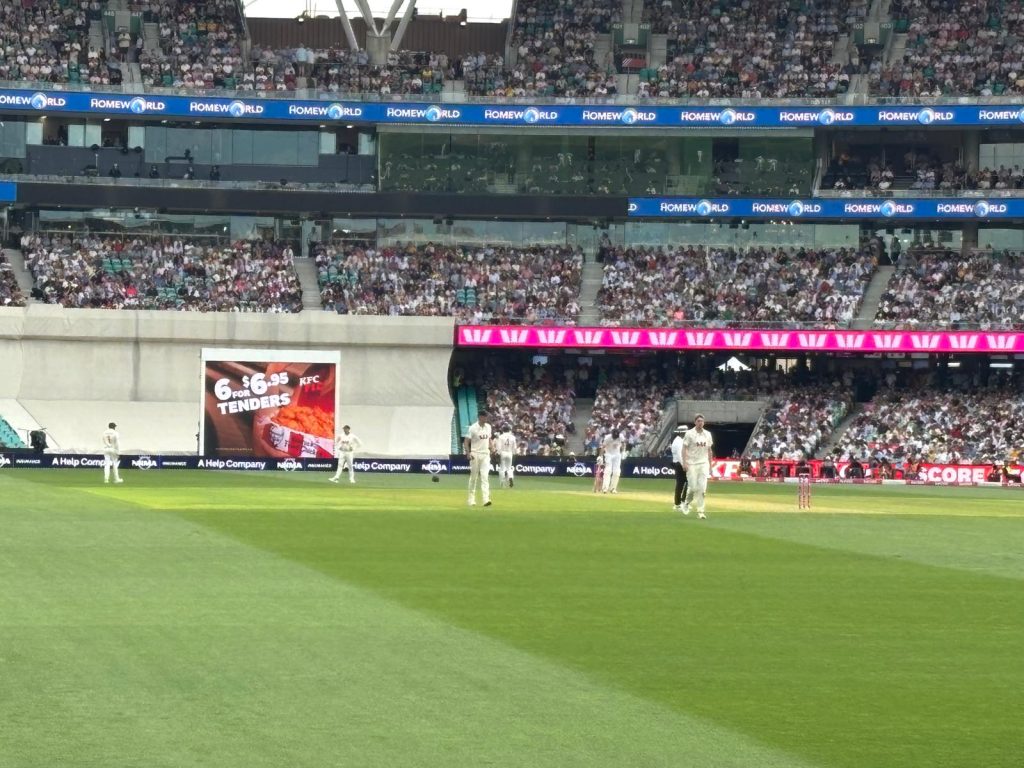
Team selections and their impact Australia’s XI featured a deep bowling line-up built around Starc, Boland and Neser, with Green and Webster offering support. On paper it provided variety and stamina, but the lack of sustained threat once the ball stopped swinging was telling.
England, meanwhile, will be pleased with the shape of their batting card. With Ben Stokes, Jamie Smith, Will Jacks, Brydon Carse, Matthew Potts and Josh Tongue yet to bat, they retain depth that could extend this advantage significantly on the second morning. The early top-order losses were offset by the assurance of Root and Brook, reinforcing the importance of experience and temperament at the top level.
Key battles begin to emerge The central contest as play resumes will be between Root and Brook’s authority and Australia’s ability to rediscover penetration. Starc’s left-arm pace brought Duckett’s dismissal and offered some shape with the new ball, while Neser’s lbw of Crawley showed the value of hitting a full length.
Boland’s wicket of Bethell, caught by Carey, demonstrated that edges are available if Australia can find the right channel. Yet the lack of follow-up wickets suggests Root and Brook have decoded the conditions effectively. Another sub-plot will be Green’s response. His 8-over spell went for 57, and Australia will need tighter control from their supporting bowlers if they are to prevent England from posting a commanding first-innings total.
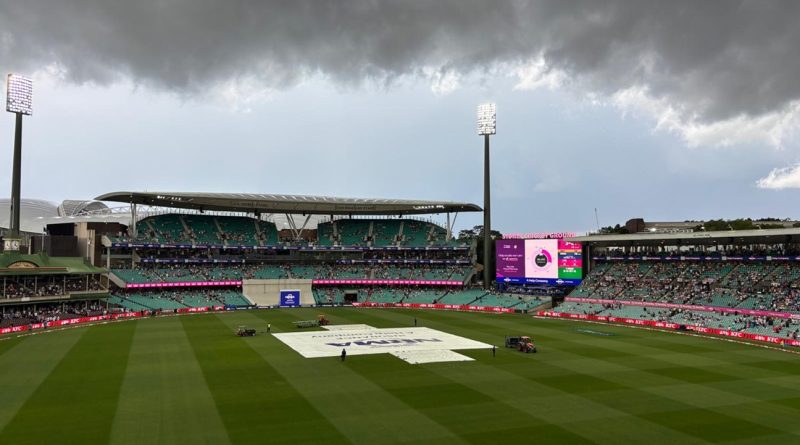
Weather, light and lost opportunities Day one was as much about what did not happen as what did. Multiple rain delays, deteriorating light and the threat of thunderstorms eventually brought an early end to proceedings, despite periods where the sun appeared and conditions seemed playable.
An early tea was taken at 2.59pm, with covers coming on as storms approached from the west. The frustration was clear among players and spectators alike, particularly given England’s position of strength at the time. By the official close, Root and Brook had just pushed the score beyond 200, and Australia were visibly grateful for the enforced pause.
Tactical outlook: where the game heads next When play resumes, England’s priority will be to capitalise on the platform built. Root and Brook are well set, and with Stokes and Smith still to come, the visitors have a chance to put Australia under sustained pressure by stretching the innings into the latter part of the second day.
Australia, conversely, require early breakthroughs. The new day will offer a fresh ball, firmer footing and perhaps slightly more assistance for the bowlers. Starc’s pace, Neser’s accuracy and Boland’s discipline will all be needed in tandem if they are to prise out the set batters before the lower middle order arrives.
Balanced outlook at the end of day one Ultimately, England will sleep the better of the two sides. While Australia showed they can still find life in a fresh pitch, their inability to sustain that pressure once the shine left the ball is a growing concern. They now face a second morning where they must produce early wickets, or risk being buried under a mountain of runs by an England middle order that looks far from finished. With four days remaining and the SCG drainage likely to be tested again, England have done the hard work of building the foundations; now, they just need the weather to cooperate so they can finish the job.