
Bethell century lifts England into lead as Sydney Test heads for final day
Day Four at the SCG: England Fight Back to Seize Control: Day four at the Sydney Cricket Ground brought the fifth Ashes Test firmly into its decisive phase, with England emerging from a long, demanding day holding a lead of 119 runs and two wickets in hand. After conceding a substantial first-innings deficit of 183, England’s response in their second innings has transformed the complexion of the match.
Australia began the day with Steven Smith and Beau Webster resuming on 518 for 7, already well placed. Their lower-order partnership extended the total to 567, giving Australia a commanding cushion and placing England under immediate pressure. Yet the narrative shifted once England began their second innings. After an early setback, they pieced together a determined reply, driven by Jacob Bethell’s career-defining unbeaten 142, to reach 302 for 8 at stumps.
The tempo of the day was relentless. England scored at just over four runs an over, refusing to settle for mere survival and instead setting about establishing a meaningful lead. By close, the match was delicately poised, with both sides aware that the final day would decide the contest.
How England’s Line-up Changes Paid Off Under Pressure
The influence of England’s younger players has been a defining feature of this Test, and day four was no exception. Jacob Bethell, who had earlier chipped in with the wicket of Travis Head in Australia’s first innings, now anchored the second-innings recovery. His presence at number three has provided balance between experience and youthful intent, particularly alongside senior figures such as Joe Root and Harry Brook.
For Australia, the bowling attack relied heavily on the established quartet of Mitchell Starc, Scott Boland, Michael Neser and Cameron Green, supported by part-time options Beau Webster, Travis Head and Marnus Labuschagne. The spread of wickets among the bowlers underlined the variety in the attack, though it was Webster’s three-wicket burst that did the most damage in the latter part of the day.
England’s ability to draw contributions from across the order – with Bethell, Brook and Duckett all passing 40 – suggests that their selection balance has paid dividends in a match that has demanded both resilience and scoring intent.
Bethell’s Defiance and the Moments that Changed the Day
The morning belonged initially to Australia. Webster brought up his half-century off 64 balls and, together with Smith, completed a 100-run eighth-wicket stand that took Australia beyond 550. England eventually wrapped up the innings on 567, but not before the tail had blunted any early hopes of restricting the deficit.
The true turning point arrived once England began their second innings. Zak Crawley was removed lbw by Starc with the score on 4, reinforcing the challenge ahead. However, Ben Duckett and Bethell steadied matters with a 81-run stand, Duckett’s fluent 42 providing early momentum.
From there, Bethell’s innings gathered substance. He reached his fifty from 87 balls, then progressed methodically, finding the boundary 15 times in a chanceless display of control. His 100 came off 162 balls and, crucially, he held the innings together while wickets fell at the other end.
Harry Brook added impetus with a brisk 42 from 48 balls, but his dismissal lbw to Webster at 219 for 4 triggered a cluster of wickets. Will Jacks followed without scoring, Jamie Smith was run out after a useful 26, and Ben Stokes departed cheaply. By 267 for 7, England were again under threat of losing control of the game.
Yet Bethell found late support from Brydon Carse, who struck a lively 16, before Scott Boland removed him. At stumps, with Bethell unbeaten and Matthew Potts yet to score, England had completed a remarkable turnaround.
Bowling Plans, Partnerships and Shifting Momentum
Australia’s bowlers attacked with discipline, particularly Scott Boland, whose figures of 19 overs, 4 maidens and 34 runs epitomised control. His economy of 1.78 kept pressure firmly on the English middle order. Neser and Starc provided contrasting approaches: Neser probing at just over three an over, while Starc looked for breakthroughs with fuller lengths and pace.
England’s batting tactics were clear. Early on, they played positively to prevent the bowlers from settling. Bethell, in particular, rotated the strike well, ensuring that the field was continually being forced to adjust. The steady rise in run rate after tea suggested a conscious attempt to build a lead quickly, rather than merely batting time.
The use of part-time bowlers by Australia in the latter stages – including Head and Labuschagne – indicated an effort to break partnerships and alter rhythm. It was Webster’s introduction, however, that proved decisive, as he claimed three wickets in a short spell to expose England’s lower order.
Crucial Battles that Defined the Afternoon Session
One of the defining contests of the day was between Bethell and Boland. Boland’s accuracy has troubled England throughout the match, but Bethell negotiated him with patience, scoring only when opportunities presented themselves and refusing to be drawn into false strokes.
Brook’s dismissal to Webster was another pivotal match-up. Brook had begun to counter-attack, but Webster’s ability to extract movement and variation forced an lbw decision that shifted momentum back towards Australia.
At the start of the innings, Crawley’s early lbw to Starc underlined the danger posed by the left-armer’s pace and swing, setting the tone for a session that demanded technical precision from England’s top order.
All Eyes on the Final Morning at Sydney
With England leading by 119 and only two wickets remaining, the opening exchanges on the final morning will be critical. Australia will aim to strike early, removing Bethell and Potts to leave a modest target. England, by contrast, will be looking to extend the lead beyond the psychological 150-run mark, knowing that every additional run increases the pressure.
The pitch has offered assistance to both seamers and batters, suggesting that any chase will require careful management. Much will depend on how Australia approach the early overs, and whether England can continue to score at the same assertive rate.
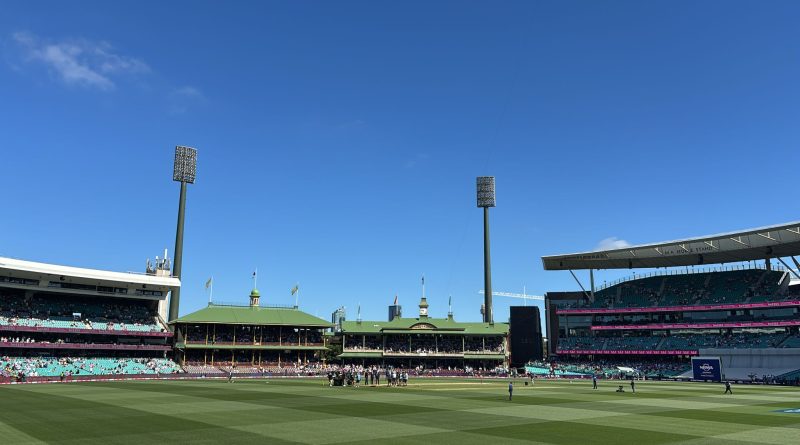
A Test Match Finely Poised Heading into Day FiveSydney Cricket Ground during day four of the fifth Ashes Test between Australia and England
Day four at Sydney delivered a contest worthy of a series finale. Australia’s commanding first-innings total set the stage, but England’s response, built around Jacob Bethell’s outstanding unbeaten 142, has brought them firmly back into the match.
With a slender but significant lead and the game delicately balanced, the fifth Test now rests on the outcome of the final day. Both sides have opportunities ahead, and the match stands as a fitting reflection of the ebb and flow that has characterised this Ashes series.