
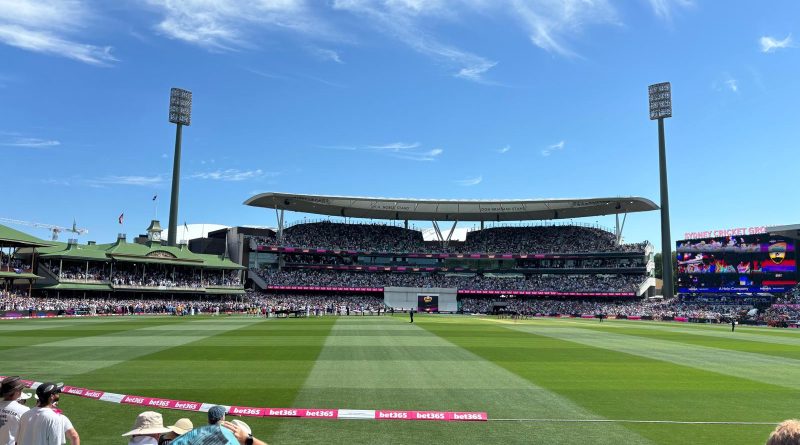
Travis Head’s Counter-Attack Keeps Australia Alive After Root’s Sydney Masterclass
Day two of the fifth Ashes Test at the Sydney Cricket Ground delivered a clear shift in momentum after England’s substantial first-innings total. Resuming on 211 for three, England were carried to 384 by Joe Root’s disciplined yet fluent 160, a knock that anchored the innings across all three sessions. His partnership work with Harry Brook, followed by a more attritional stand with Jamie Smith and Will Jacks, ensured England moved from a strong platform into a commanding position.
Australia’s response was equally purposeful. In just over 34 overs, they reached 166 for two at stumps, scoring at close to five runs per over. Travis Head’s unbeaten 91 from 87 balls transformed what could have been a cautious consolidation phase into a statement of intent. With Australia still 218 runs in arrears, the contest is delicately balanced heading into the third morning.
Team Selections and Their Impact
England’s bowling selection came under examination during Australia’s rapid scoring phase. Brydon Carse, Matthew Potts and Josh Tongue were unable to make early inroads, while Ben Stokes was the only bowler to claim wickets, removing Jake Weatherald and Marnus Labuschagne in an eight-over spell. The absence of wickets during the new-ball burst allowed Australia’s top order to play with freedom.
For Australia, their reliance on a varied attack was evident earlier in the day. Michael Neser led the bowling with four wickets, supported by Scott Boland’s two and steady contributions from Mitchell Starc and Cameron Green. Marnus Labuschagne’s part-time spin also provided a breakthrough, underlining the value of flexible bowling options on a surface that offered something for those willing to persist in the right areas.
Key Performances and Turning Points
Joe Root’s innings was the defining effort of the day. His 160 from 242 balls featured 15 boundaries and absorbed pressure during both the morning and afternoon sessions. He brought up his hundred shortly after the first drinks break and later moved to 150, ensuring England remained in control even as wickets fell around him.
Harry Brook’s 84 provided the ideal foil, scoring at a brisk rate to push Australia onto the defensive. Their partnership was England’s most productive, adding 169 for the fourth wicket and shifting the tone decisively after early losses.
Australia’s reply was dominated by Travis Head. From the opening overs, he played with a freedom that disrupted England’s lengths. His 50 came from just 55 balls, and by stumps he had struck 15 fours, reaching 91 not out. The early dismissal of Labuschagne for 48 could have slowed Australia’s momentum, but Head continued to attack, supported quietly by Michael Neser.
Tactical Patterns and Field Strategies
England’s innings was built on patience and controlled aggression. Root in particular resisted the temptation to chase the scoring, trusting that accumulation would wear down Australia’s attack. The new ball taken after 80 overs brought brief hope for the hosts, but England managed to add valuable runs in the final session before being dismissed.
Australia’s bowling patterns showed a willingness to rotate options, with six bowlers used. Neser’s four wickets were a reward for accuracy, while Boland’s economy helped contain the scoring during Root’s long stay.
When England bowled, however, the lack of consistent pressure was notable. The early overs to Head and Weatherald allowed scoring opportunities on both sides of the wicket. Once the ball softened, the fields were spread rapidly, enabling Australia to maintain a high run rate and reducing the likelihood of building sustained pressure.
Key Player Match-Ups
The contest between Ben Stokes and Australia’s top order proved pivotal. Stokes accounted for both Weatherald and Labuschagne, using a disciplined line to draw errors after solid starts. His figures of two for 30 from just over eight overs stood out in an otherwise challenging session for England’s bowlers.
Travis Head versus the rest of England’s attack told a different story. Against Potts and Carse in particular, Head was able to dominate the scoring, driving and pulling with authority. Tongue offered greater control, conceding just 31 runs from 10 overs, but was unable to find the breakthrough that would have stemmed Australia’s momentum.
What the Next Phase Holds
With Australia still trailing but with eight wickets in hand, the opening session of day three will be critical. Head will look to convert his fluent start into a substantial score, while England will be eager to strike early to prevent the deficit from being erased too quickly.
England’s aim will be to tighten their lines and make better use of the new ball if early wickets are not forthcoming. Australia, by contrast, will focus on batting deep and setting up a position from which they can challenge England’s first-innings advantage.
Closing Outlook
Day two belonged to two contrasting yet equally influential innings. Joe Root’s authoritative 160 laid the foundation for England’s strong total, while Travis Head’s counter-attacking 91 not out has kept Australia firmly in the contest. With the pitch still offering assistance and plenty of time left in the match, the balance remains delicately poised as the Ashes battle heads into a decisive third day.